When Is a Component Truly Industrializable?
In the OEM sector, one of the most common mistakes is confusing component design with actual industrialization.
A component may be perfectly functional from a technical standpoint, successfully pass validation testing, and meet all the performance requirements defined by the project. However, this does not automatically mean that it is industrializable.
The real challenge begins when the component must move beyond the prototyping stage and enter serial production.
In industries such as material handling equipment, construction machinery, agricultural equipment, and industrial HVAC systems, the objective is not simply to manufacture a compliant part once. The goal is to produce thousands of identical components over time while maintaining consistent quality standards, reliability levels, and cost performance.
For this reason, industrialization is a discipline in its own right, distinct from product design.
A component can be considered truly industrialized when its design has been developed taking into account not only its intended function, but also how it will be manufactured, inspected, handled, assembled, and managed throughout its entire lifecycle.
This is where two fundamental concepts for any OEM organization come into play: Design for Manufacturing (DFM) and Design for Assembly (DFA).
Design for Manufacturing focuses on designing a component so that it can be manufactured efficiently, repeatably, and sustainably in an industrial environment. This means selecting geometries compatible with the chosen manufacturing process, minimizing low-value-added operations, reducing unnecessary tolerances, and facilitating quality control throughout production.
Design for Assembly, on the other hand, focuses on simplifying assembly operations. Reducing the number of parts, eliminating complex interfaces, and making the assembly sequence more intuitive helps reduce cycle times, minimize errors, and improve overall productivity.
When these principles are applied correctly, the result is not merely a component that is easier to manufacture. It leads to a product that is more stable, more reliable, and less exposed to the variability typically associated with serial production.
Process repeatability is one of the most important indicators of successful industrialization. A truly robust manufacturing process must be capable of delivering the same level of conformity today, six months from now, and five years from now, regardless of production volumes, work shifts, or operating conditions.
Alongside repeatability, there is another critical factor: scalability.
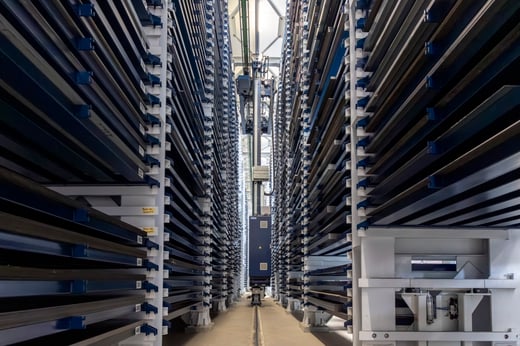
Many components perform flawlessly when produced in small quantities. Challenges arise when volumes increase and the process must support hundreds or thousands of units per year.
Under these circumstances, factors such as the following become decisive:
- Available production capacity
- Stability of special processes
- Equipment reliability
- Tooling availability
- Supply chain control
- Product variant management
A truly industrialized component must be capable of supporting volume growth without generating a proportional increase in costs, non-conformities, or operational complexity.
Finally, industrialization must also be evaluated from a long-term economic perspective.
Too often, decisions are made based solely on the initial cost of tooling, molds, or production investments. In reality, the most advanced OEMs evaluate the component’s Total Cost of Ownership (TCO) throughout its entire lifecycle.
A solution that appears more expensive during the initial phase may generate significant long-term benefits through:
- Lower scrap rates
- Increased productivity
- Reduced rework
- Improved quality
- Lower logistics costs
- Reduced warranty costs
- Greater supply chain reliability
For this reason, a component is not industrialized simply because it can be manufactured.
A component is truly industrialized when it can be produced thousands of times while maintaining the same quality standards, lead times, performance levels, and economic efficiency.
And it is precisely this ability to transform a design into a stable and scalable manufacturing process that defines the value of a true industrial partner.
Warning Signs That a Project Will Be Difficult to Industrialize
Many industrialization issues do not emerge during the design phase.
Nor do they typically appear during prototyping.
In most cases, they become evident only when the component enters serial production and must be manufactured hundreds or thousands of times while maintaining quality, costs, and delivery performance under control.
At that stage, technical buyers, industrialization managers, and production managers begin facing challenges that rarely stem from a single design error. More often, they are the result of design decisions that, while technically sound, were not optimized for manufacturing.
Recognizing these warning signs early in the development process can make the difference between a stable production program and a project that continuously generates hidden costs, delays, and non-conformities.
Excessive Manual Operations
One of the first indicators of a difficult-to-industrialize project is excessive dependence on manual operations.
Whenever a component requires multiple operator-dependent tasks, process variability inevitably increases.
Every manual intervention introduces factors that are inherently difficult to control:
- Differences in operator practices
- Variations in cycle times
- Positioning errors
- Rework activities
- Increased exposure to non-conformities
In high-volume OEM manufacturing, repeatability is one of the key drivers of competitiveness. The more a process depends on individual skills, the more difficult it becomes to ensure consistency over time.
For this reason, during the industrialization phase it is essential to evaluate whether certain operations can be simplified, automated, or eliminated through design optimization.
Excessive Part Count
Another common warning sign is excessive assembly complexity.
Every additional component introduces:
- A more complex Bill of Materials (BOM)
- Increased procurement activities
- Additional quality inspections
- More assembly operations
- Greater opportunities for error
From a manufacturing perspective, every component represents another variable that must be managed.
This is why one of the primary objectives of co-engineering activities is to reduce the total number of parts through functional integration or component redesign.
In many cases, a solution that appears more complex from a design standpoint can prove significantly easier to manufacture and assemble.
Tolerances That Are More Stringent Than Necessary
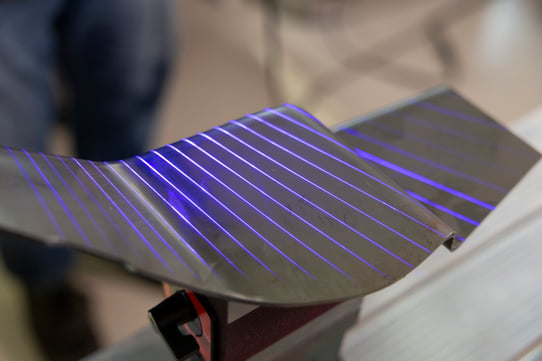
Tolerances represent one of the most critical aspects of industrialization.
In an effort to guarantee high quality levels, design teams often specify extremely tight tolerances even on features that have little or no impact on the actual functionality of the component.
The result is a substantial increase in manufacturing costs.
Tighter tolerances generally require:
- More sophisticated manufacturing processes
- More expensive equipment
- Longer processing times
- Increased inspection frequency
- Higher scrap rates
The question every industrialization team should ask is straightforward:
"Is this tolerance truly necessary to ensure the component performs its intended function?"
If the answer is no, the design may be over-specified and therefore more difficult and costly to industrialize.
Geometries Requiring Significant Capital Investment
Another common warning sign is the presence of geometries that can only be produced through highly specialized and expensive tooling.
This issue is particularly common in large structural components used in the material handling, construction equipment, and agricultural machinery sectors.
In such cases, the initial investment in molds, dies, fixtures, or tooling can significantly impact the economic viability of the project.
In many situations, an intelligent design review can achieve the same functional outcome through alternative manufacturing technologies or hybrid process combinations.
A typical example involves components originally designed for dedicated molding processes that are later redesigned using fabricated sheet metal structures, press brake forming, thermoforming, or hybrid assemblies, dramatically reducing upfront investment without compromising quality or aesthetics.
Manufacturing Processes Distributed Across Too Many Suppliers
Supply chain fragmentation is one of the primary sources of inefficiency in complex industrial projects.
When a component must pass through multiple suppliers before reaching final assembly, the following factors inevitably increase:
- Lead times
- Coordination activities
- Logistics risks
- Potential sources of error
- Traceability challenges
Every additional handoff creates a new interface that must be managed.
For buyers and production managers, this often translates into increased operational complexity and reduced responsiveness when process deviations occur.
For this reason, the most advanced OEMs increasingly favor partners capable of integrating multiple manufacturing processes within the same production ecosystem, reducing transitions and improving overall control.
High Sensitivity to Process Variations
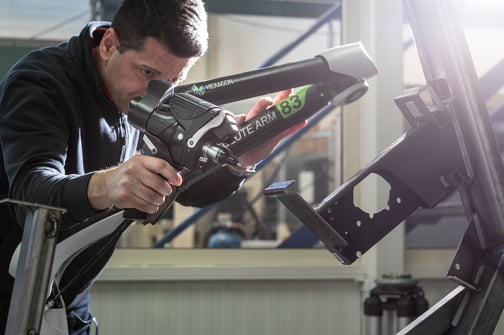
The final warning sign—often the most difficult to identify during the early stages of development—is insufficient design robustness.
Some components perform correctly only when all manufacturing conditions are perfectly controlled.
Even minor variations can lead to:
- Dimensional issues
- Assembly difficulties
- Distortion and warpage
- Surface defects
- Quality instability
In these situations, the problem is not necessarily the manufacturing process itself.
More often, the design lacks sufficient tolerance to the normal process variations that every industrial system naturally generates over time.
A truly industrialized component must be designed to perform reliably under real production conditions—not only under ideal conditions assumed during the design phase.
The Key Takeaway
When one or more of these warning signs begin to emerge, the risk extends far beyond higher production costs.
The real risk is compromising the project's ability to support increasing production volumes while maintaining quality, competitiveness, and supply chain reliability.
For this reason, industrialization should never be considered an activity that takes place after product design.
It should be an integral part of the project from the earliest stages of development.
How to Select the Most Suitable Manufacturing Technology
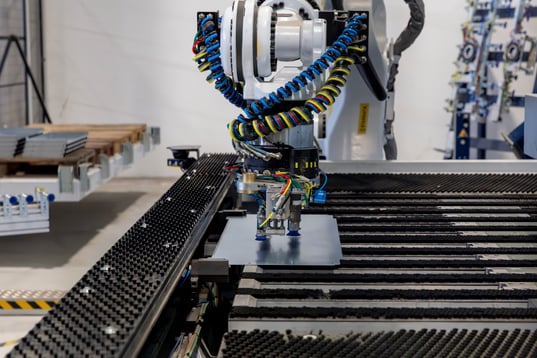
One of the most common misconceptions in manufacturing is the belief that there is one production technology that is inherently superior to all others.
In the OEM world, reality is far more complex.
There is no universally superior manufacturing technology. There is only the technology that best fits a specific component, a specific production volume, and a specific industrial context.
The same solution that represents the optimal choice for a production run of 500 units per year may become inefficient at volumes of 50,000 units. Likewise, a technology perfectly suited for a structural component may prove unsuitable for an aesthetic part or for an assembly with particularly demanding dimensional requirements.
For technical buyers, industrialization managers, and production managers, the real challenge is therefore not evaluating a technology based on its theoretical capabilities, but on its ability to deliver the best balance between:
- Initial investment
- Unit cost
- Quality
- Repeatability
- Flexibility
- Speed of industrialization
- Long-term sustainability
Sheet Metal Fabrication: Flexibility and Fast Industrialization
Sheet metal fabrication is one of the most versatile technologies for manufacturing structural components used in the material handling, construction equipment, and agricultural machinery sectors.
Its primary advantage is flexibility.
Compared with processes that require significant investment in dedicated tooling, sheet metal fabrication allows manufacturers to:
- Reduce upfront capital expenditure
- Accelerate time-to-market
- Manage product variants efficiently
- Implement design changes rapidly
For this reason, it is often used during the early stages of a project or for components characterized by medium-to-low production volumes and high levels of customization.
Its effectiveness increases even further when integrated with advanced cutting and welding technologies.
Robotic Laser Cutting: Precision and Repeatability
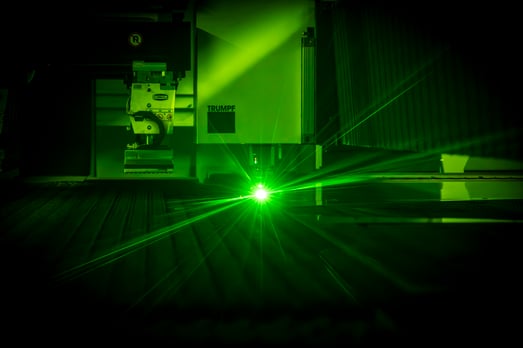
In recent years, robotic laser cutting has become increasingly important in the industrialization of complex structural components.
Compared with conventional cutting methods, it offers several significant advantages:
- High geometric accuracy
- Reduced distortion
- Improved repeatability
- Faster processing speeds
- Capability to handle complex geometries
For components destined for serial production, cutting quality often represents the foundation for ensuring stability throughout the entire manufacturing process.
Greater precision during the initial stages results in fewer issues during subsequent forming, welding, and assembly operations.
Robotic Welding: Consistent Quality at High Volumes
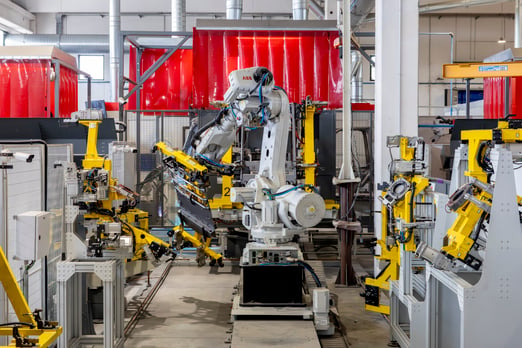
Welding is one of the most critical special processes within the OEM industry.
As production volumes increase, robotic welding enables levels of repeatability that are difficult to achieve through manual welding processes.
Key advantages include:
- Consistent weld quality
- Reduced process variability
- Increased productivity
- Enhanced process parameter control
- Full traceability of operations
For structural components used in forklifts, excavators, and agricultural machinery, weld consistency is a critical factor in ensuring long-term reliability.
However, automation only generates value when the component has been specifically designed to be compatible with robotic welding processes.
Once again, this highlights the importance of proactive industrialization and Design for Manufacturing principles.
Injection Molding: Maximum Efficiency for High-Volume Production
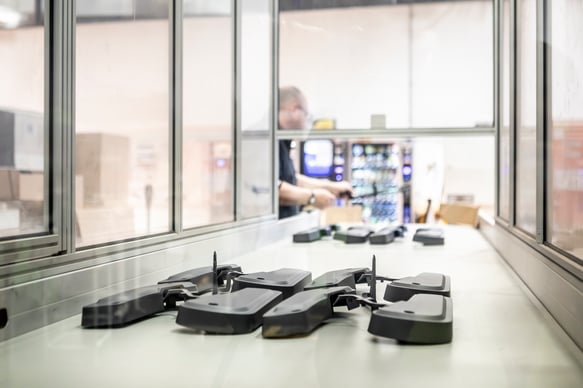
When production volumes become sufficiently high, plastic injection molding often represents one of the most efficient manufacturing solutions available.
Its primary limitation is the significant upfront investment required for mold development.
However, when annual volumes justify the investment, the benefits can be substantial:
- Lower unit cost
- High repeatability
- Excellent dimensional accuracy
- Superior surface finish and aesthetics
- Very high production capacity
A practical example comes from an automotive component project in which a part originally manufactured through thermoforming was redesigned for injection molding. Despite the higher initial tooling investment, the new solution dramatically reduced variable costs while improving product quality over the long term.
This demonstrates that the right decision is not determined by the technology itself, but by the balance between investment requirements and lifecycle economics.
Thermoforming: Speed and Reduced Tooling Investment
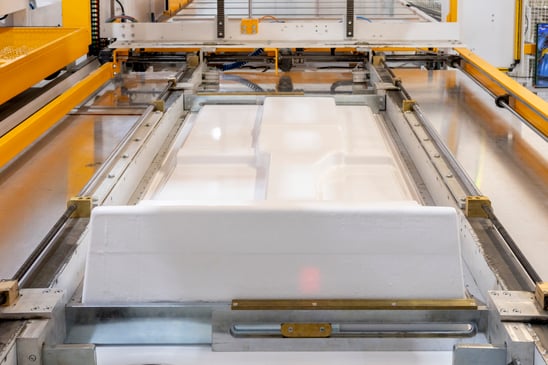
Thermoforming remains a highly attractive manufacturing technology for many industrial applications.
Compared with injection molding, it offers:
- Lower initial tooling investment
- Faster development timelines
- Greater design flexibility
- Cost-effectiveness for low-to-medium production volumes
It is particularly well suited for large panels, covers, enclosures, and other large-format industrial components.
However, as production volumes increase significantly, limitations may emerge in areas such as:
- Variable production costs
- Dimensional accuracy
- Productivity
As with all manufacturing technologies, the optimal choice depends on the specific production context.
Hybrid Metal-Plastic Assemblies: Combining the Best of Both Materials
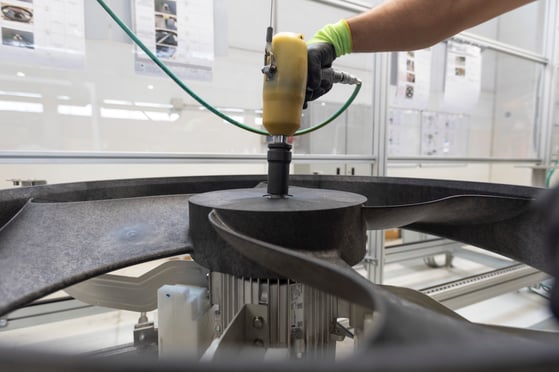
One of the most interesting trends in recent years has been the integration of metal and plastic components into hybrid assemblies.
Hybrid solutions make it possible to combine:
- The structural strength of metal
- The lightweight characteristics of plastic
- Greater design flexibility
- Reduced tooling costs
A particularly noteworthy example comes from a material handling project involving a large molded component that required a substantial upfront tooling investment.
Through a co-engineering approach, the component was redesigned by combining a press-brake-formed metal section with a thermoformed plastic section, subsequently joined through structural bonding.
The result was a reduction of more than €100,000 in initial investment while fully maintaining both aesthetic and functional requirements.
This example demonstrates that the most effective solution is often not choosing one technology over another, but intelligently combining multiple technologies to achieve the optimal outcome.
The Right Technology Is the One That Supports the Business
Ultimately, selecting a manufacturing technology is not purely a technical decision.
It is an industrial and business decision.
The right solution must simultaneously support:
- Expected production volumes
- Quality requirements
- Delivery performance
- Future scalability
- Project profitability objectives
This is why the most advanced OEMs involve manufacturing partners from the earliest stages of product development, transforming technology selection into a tangible competitive advantage.
Because the success of a component depends not only on how it is designed.
It depends, above all, on how it will be manufactured over the next ten years.
The Role of Co-Engineering in Cost Reduction
Many OEMs begin looking for cost-saving opportunities only after a project has been completed and the component has already entered production.
By that stage, however, it is often too late.
The key technical decisions have already been made, tooling has been commissioned, manufacturing processes have been defined, and opportunities for meaningful improvement have been drastically reduced.
This is precisely why the most advanced industrial organizations involve manufacturing partners during the early stages of product development.
Co-engineering is built on this principle: combining the OEM’s design expertise with the manufacturing know-how of the production partner to identify more efficient solutions before the design is frozen.
The objective is not to change the component’s intended function.
The objective is to achieve the same technical performance through a solution that is easier to manufacture, more robust, and more competitive over the long term.
Most of a Component's Cost Is Determined Long Before Production Begins
According to established product development models, the majority of a component’s lifecycle cost is defined during the early stages of design.
At this point, decisions are made regarding factors that will influence the product throughout its entire lifecycle:
- Materials
- Geometries
- Tolerances
- Manufacturing technologies
- Required tooling
- Assembly processes
- Quality control strategies
Once production has started, modifying any of these elements becomes significantly more expensive and complex.
For this reason, co-engineering is one of the most effective ways to reduce Total Cost of Ownership (TCO) without compromising performance or quality.
Optimizing Geometry to Simplify Manufacturing
One of the most common co-engineering activities involves reviewing component geometries.
A component may be designed to fully satisfy functional requirements while overlooking manufacturing implications.
In many cases, relatively small geometric modifications can deliver substantial benefits, including:
- Reduced cycle times
- Elimination of secondary operations
- Reduced dependence on dedicated tooling
- Improved dimensional stability
- Lower scrap rates
A practical example comes from a material handling project involving an equipment access door.
The original design required a complex machining operation to accommodate a radius feature on the hood assembly. Through a design review process, the geometry was modified by introducing three bends that achieved the same functional result while completely eliminating the machining operation.
The benefits were immediate:
- One less manufacturing operation
- Reduced production costs
- Lower reliance on outsourced processing
- Improved overall process efficiency
Reducing Part Count Means Reducing Complexity
Every additional component introduces complexity.
More part numbers result in:
- More purchasing activities
- More suppliers to manage
- More inspections
- More assembly operations
- More opportunities for error
For this reason, one of the most valuable co-engineering activities is evaluating whether multiple functions can be integrated into a single component or whether the overall number of parts can be reduced.
Reducing complexity does not only benefit manufacturing.
It creates advantages throughout the entire supply chain, including:
- Reduced documentation management
- Lower inventory levels
- Simplified logistics
- Improved overall reliability
Eliminating Non-Value-Added Operations
Not every manufacturing operation truly adds value to the final product.
Many operations remain in place simply because "that is how it has always been done."
Co-engineering provides an opportunity to challenge these assumptions and determine whether such activities are genuinely necessary.
In many cases, it is possible to:
- Eliminate machining operations
- Reduce manual processes
- Simplify inspection activities
- Eliminate rework
- Reduce internal material handling
Every eliminated step represents a potential improvement in:
- Cost
- Quality
- Lead time
- Process reliability
For OEMs, this translates into increased competitiveness without affecting the performance of the final product.
Simplifying Assembly Increases Productivity
A component may be highly optimized for manufacturing yet still generate inefficiencies during assembly.
For this reason, effective co-engineering must also address assembly requirements.
Key questions include:
- Is the component easy to position correctly?
- Is there potential for operator error?
- Are special tools required?
- Is assembly time optimized?
Often, relatively minor design modifications can:
- Reduce the number of assembly operations
- Shorten cycle times
- Improve ergonomics
- Minimize the risk of errors
When these benefits are multiplied across thousands of units per year, the economic impact becomes highly significant.
Reducing Tooling Investments
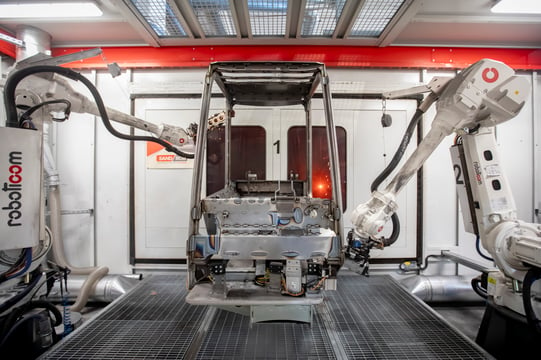
One of the aspects most appreciated by OEMs is the ability to reduce—or even eliminate—substantial upfront tooling investments.
Many projects are initially developed under the assumption that a particular manufacturing technology is the only viable option.
In reality, involving a manufacturing partner during the early development stages often reveals alternative approaches.
A notable example comes from a material handling application.
The original design required a large stamped sheet metal component, with tooling investments exceeding €100,000.
Through a co-engineering initiative, the component was redesigned into two separate elements: one produced through press brake forming and the other through thermoforming, subsequently joined through a dedicated assembly process.
The result was a reduction of more than €100,000 in upfront tooling investment without any compromise in aesthetics, functionality, or performance.
This example illustrates that true innovation does not necessarily mean adopting new technologies.
More often, it means combining existing technologies in a smarter way.
From Supplier to Industrial Partner
The difference between a conventional supplier and a true co-engineering partner becomes particularly evident during this phase.
A supplier receives a drawing and manufactures the requested component.
An industrial partner analyzes the design, identifies opportunities for improvement, and actively contributes to reducing costs, mitigating risks, and simplifying manufacturing complexity.
For OEMs operating in highly competitive markets, this capability increasingly represents a strategic advantage.
Because the greatest savings are rarely achieved through price negotiations alone.
They are achieved by designing a component from the outset to be simpler, more robust, and more efficient to manufacture.
Industrialization Means Reducing Operational Risk
When discussing industrialization, most companies tend to focus on factors such as unit cost, cycle times, or production investments.
All of these are important.
However, for a technical buyer, a Supplier Quality Engineer (SQE), or a production manager within a global OEM organization, there is another variable that has become increasingly important in recent years: operational risk.
Global logistics disruptions, supply chain instability, growing product complexity, and rising customer expectations have fundamentally changed the way suppliers are evaluated.
Today, a component is not assessed solely based on its cost.
It is also evaluated based on the level of risk it introduces into the production system.
This is where industrialization becomes a strategic capability.
Because a well-industrialized process does not only generate efficiency.
It generates predictability.
And predictability is one of the most important foundations of a resilient supply chain.
Less Variability Means Greater Reliability
One of the primary objectives of industrialization is to reduce process variability.
Every manufacturing system naturally generates variation.
The difference between a robust process and a fragile one lies in the ability to control it.
When a component has been properly designed and industrialized:
- Tolerances are aligned with functional requirements
- Manufacturing operations are repeatable
- Processes remain stable over time
- Critical characteristics are continuously monitored
The result is a significant reduction in quality fluctuations.
For an OEM, this translates into more reliable supply performance and reduced exposure to production disruptions.
In simple terms: fewer surprises.
Fewer Non-Conformities, Fewer Disruptions
Every non-conformity generates a cost.
However, the true cost rarely corresponds to the value of the defective component itself.
The consequences may include:
- Production line stoppages
- Delivery delays
- Rework activities
- Extraordinary logistics costs
- Containment actions
- Emergency audits
- Escalations to the end customer
When a project has been properly industrialized, the likelihood of these events occurring is significantly reduced.
Reducing non-conformities is not merely a quality department objective.
It is a critical factor in ensuring operational continuity.
Traceability Becomes a Competitive Advantage
Within the most advanced OEM environments, traceability is no longer viewed simply as a documentation requirement.
It is a risk management tool.
When a component can be linked to:
- Material batch information
- Production orders
- Process parameters
- Quality inspection records
- Serial number identification
it becomes possible to rapidly reconstruct the complete history of the product.
This enables organizations to:
- Quickly isolate potential issues
- Limit the number of affected components
- Accelerate containment activities
- Reduce the financial impact of process deviations
For buyers and SQEs, rapid access to this information is now one of the most important indicators of a supplier’s industrial maturity.
Faster Response Times When Problems Occur

No manufacturing system is immune to problems.
The real difference lies in how quickly those problems can be identified and resolved.
In a fragmented supply chain, identifying the root cause of an issue may take days.
Information must be collected from multiple suppliers, compared, validated, and analyzed before any action can be taken.
In a structured and industrialized environment, the time between problem identification and resolution is dramatically reduced.
This is possible because:
- Processes are documented
- Data is readily available
- Responsibilities are clearly defined
- Information is easily accessible
For OEMs, responsiveness is often more important than the complete absence of problems.
Because the true cost is not the error itself.
It is the time required to contain and resolve it.
Managing Engineering Changes Without Disrupting Production
Another frequently underestimated area is engineering change management.
In industries such as material handling, construction equipment, agriculture, and HVAC, engineering changes are a constant reality.
New regulations.
Technical improvements.
Cost optimization initiatives.
Functional upgrades.
Every change introduces potential risk.
When a process has not been properly industrialized, even a simple design revision can generate:
- Version control errors
- Lot mix-ups
- Non-conforming components
- Assembly issues
- Delivery delays
By contrast, a well-structured industrial organization has procedures in place to manage change in a controlled and systematic manner.
The ability to implement engineering changes quickly without compromising quality or production continuity has become one of the most important capabilities OEMs look for in their suppliers.
Why Unit Price Does Not Tell the Whole Story
Many purchasing decisions still focus primarily on component price.
However, experienced buyers understand that unit price is only one part of the equation.
A seemingly less expensive component can generate substantially higher costs if it introduces:
- Greater process variability
- Increased non-conformities
- Limited traceability
- Longer response times
- Difficulties in managing engineering changes
For this reason, modern supplier evaluations increasingly focus on metrics such as:
- Process stability
- Industrialization capability
- Supply chain resilience
- Control of special characteristics
- Ability to support volume growth
These factors do not appear directly in the purchase price.
Yet they have a profound impact on the total cost of the project.
Industrialization Means Building Resilience
Ultimately, the true objective of industrialization is not simply to manufacture more efficiently.
It is to reduce risk throughout the entire value chain.
A properly industrialized component is easier to manufacture, easier to inspect, easier to modify, and easier to manage when circumstances change.
And it is precisely this ability to maintain stability, quality, and continuity over time that makes industrialization one of the most powerful tools for strengthening supply chain resilience.
For technical buyers, SQEs, and production managers, this value is often far more significant than a marginal difference in unit price.
Because long-term competitiveness is built not only on cost reduction, but on the ability to deliver predictable performance under real-world operating conditions.
Why Process Integration Accelerates Industrialization
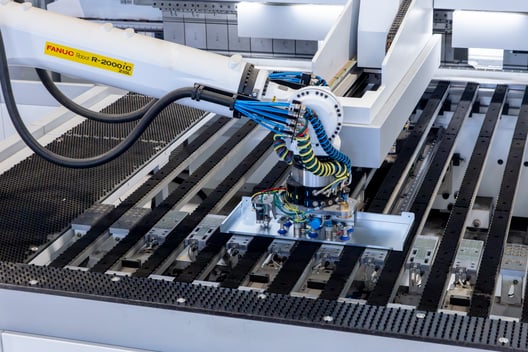
One of the primary obstacles to the industrialization of complex structural components is not the manufacturing technology itself.
More often than not, the real challenge is process fragmentation.
When a component must pass through multiple suppliers before reaching the final assembly line, several issues inevitably increase:
- Lead times
- Coordination activities
- Risk of errors
- Traceability challenges
- Probability of non-conformities
- Complexity in managing engineering changes
Every additional handoff introduces a new interface that must be managed.
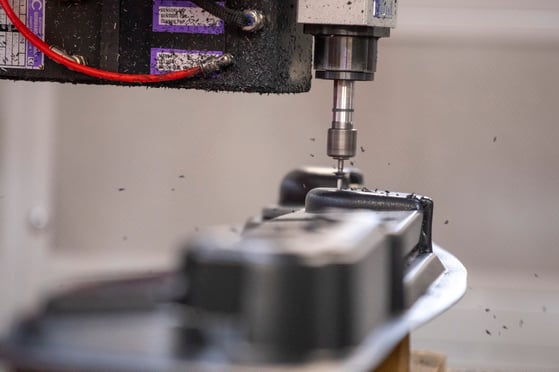
And every interface represents a potential point of disruption.
This is why the most advanced OEMs are placing increasing emphasis on the ability of industrial partners to integrate multiple manufacturing processes within a single production ecosystem.
The goal is not simply to reduce the number of suppliers.
The goal is to reduce complexity.
The Hidden Cost of Interfaces
When a component is produced through a chain of specialized suppliers, every transition generates activities that are often overlooked during the initial project evaluation.
These include:
- Logistics transfers
- Intermediate inspections
- Documentation management
- Technical coordination
- Revision management
- Quality-related activities
- Communication between different departments and organizations
None of these activities add value to the final product.
They add complexity.
And complexity is one of the primary sources of industrial risk.
The more fragmented the production flow becomes, the greater the likelihood that information will be misinterpreted, a design revision will not be properly implemented, or a problem will be identified too late.
Faster Industrialization Through Process Continuity
When multiple manufacturing processes are managed within the same industrial environment, the path from design to production becomes significantly simpler.
Decisions can be made more quickly.
Technical validations are accelerated.
Problems are identified earlier.
Corrective actions can be implemented faster.
This happens because manufacturing expertise is able to interact directly and continuously throughout the project.
Within an integrated production environment, teams responsible for:
- Robotic laser cutting
- Sheet metal fabrication
- Robotic welding
- Painting
- Cathodic electrocoating (e-coating)
- Plastic injection molding
- Thermoforming
- Assembly
work together on the same project from the earliest stages of industrialization.
As a result, potential issues are identified before they evolve into production problems.
From Laser Cutting to Final Assembly: A Unified Component Perspective
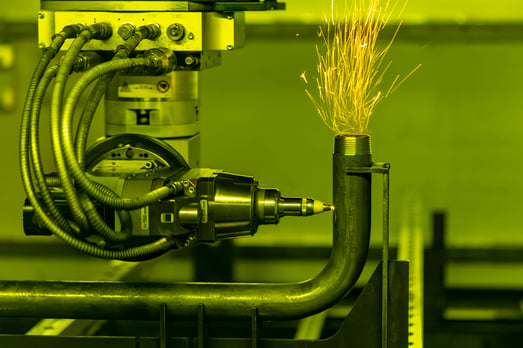
A complex structural component cannot be evaluated by analyzing each manufacturing operation in isolation.
Every process influences the next.
The quality of laser cutting affects the accuracy of bending operations.
The quality of fabricated structures influences welding stability.
Welding impacts dimensional accuracy and surface characteristics.
Surface finishing processes affect the final quality perceived by the customer.
Assembly is ultimately the stage where all tolerances and process variables converge.
When these operations are managed independently by different suppliers, each organization tends to optimize its own process without a complete understanding of the final outcome.
In an integrated manufacturing environment, however, the component is managed as a single industrial workflow.
This approach makes it possible to optimize overall performance rather than individual operations.
Faster Engineering Change Implementation
One of the greatest advantages of process integration becomes evident when a project undergoes revision.
In OEM industries, engineering changes are part of everyday business.
Changes may be introduced to:
- Improve performance
- Reduce costs
- Comply with new regulations
- Correct issues identified in the field
When the manufacturing chain is fragmented, every change must be communicated, transferred, and implemented across multiple organizations.
This increases:
- Implementation lead times
- Risk of errors
- Probability of obsolete version usage
Within an integrated ecosystem, by contrast, information flows much more efficiently.
Changes can be propagated rapidly throughout the entire manufacturing process, reducing risk and accelerating time-to-market.
Greater Quality Control
From a quality perspective, integration also delivers substantial advantages.
When processes are managed within the same production environment, it becomes easier to:
- Correlate root causes of problems
- Trace the origin of process deviations
- Implement corrective actions
- Verify the effectiveness of process improvements
This is particularly important for components used in industries where reliability and operational continuity are critical requirements.
For an SQE or Quality Manager, rapid access to data covering the entire production process is often far more valuable than visibility into an isolated manufacturing operation.
Process Integration as a Competitive Advantage
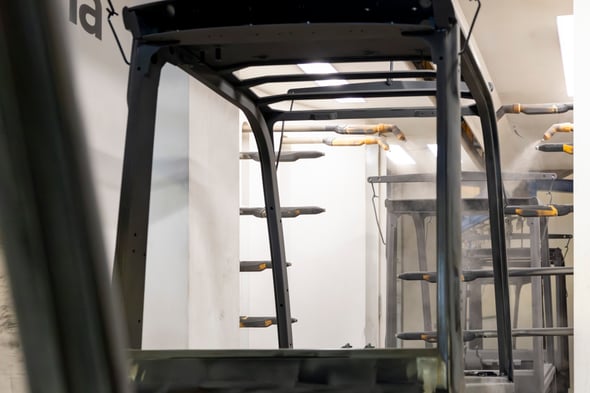
Process integration should not be viewed simply as an organizational choice.
It is a strategic industrial lever.
It enables companies to reduce handoffs, minimize interfaces, and improve coordination between different manufacturing stages.
The result is:
- Faster industrialization
- Reduced operational risk
- Greater process stability
- Improved scalability
- Enhanced ability to support OEM growth requirements
Ultimately, the advantage does not come merely from having multiple technologies available within the same facility.
It comes from the ability to make those technologies operate as a single, coordinated system.
Because when the path from design to production becomes simpler, quality, reliability, and competitiveness become easier to achieve as well.
Fewer handoffs.
Fewer interfaces.
Less variability.
Lower operational risk.
And it is often at this point that the greatest industrial value is created.
What OEMs Evaluate Today Before Awarding a New Project
Until a few years ago, supplier selection was primarily driven by three factors:
- Price
- Quality
- Delivery performance
Today, particularly in industries such as material handling, construction equipment, agricultural machinery, and industrial HVAC systems, the decision-making process has become significantly more sophisticated.
Increasing supply chain complexity, higher quality expectations, and the need to guarantee production continuity have fundamentally changed how technical buyers, Supplier Quality Engineers (SQEs), and procurement managers evaluate potential industrial partners.
The question is no longer simply:
"Can this supplier manufacture the component?"
The real question has become:
"Can this supplier support our business over the next five to ten years while ensuring stability, quality, and scalability?"
For this reason, when an OEM awards a new project, the evaluation extends far beyond unit price.
Manufacturing Capacity: The Ability to Produce Today
The first requirement is naturally manufacturing capacity.
OEMs must be confident that a supplier can support the required production volumes while ensuring:
- Consistent quality
- Reliable lead times
- Operational continuity
- Stable manufacturing processes
However, simply owning equipment is not enough.
What OEMs truly evaluate is the organization's ability to convert theoretical capacity into actual production capability.
This is why supplier audits and qualification processes typically assess factors such as:
- Equipment utilization levels
- Production flow organization
- Degree of automation
- Resource management
- Business continuity plans
The objective is to determine whether the supplier can sustain production reliably over the long term.
Scalability: The Ability to Produce Tomorrow
For many OEMs, current production requirements are only the starting point.
A new platform may grow rapidly.
A new model may exceed forecasts.
A new market opportunity may generate unexpected demand.
As a result, manufacturing capacity is evaluated together with scalability.
Buyers want to understand:
- Does the supplier have room for expansion?
- Can production capacity be increased without compromising quality?
- Can the supplier support volume growth in the medium and long term?
- Does the organization possess the expertise required to manage significant growth?
In many cases, partner selection is based not on current demand, but on the supplier’s ability to support future demand.
Validated Special Processes: Quality Must Be Demonstrable
For complex structural components, many quality characteristics depend on processes that cannot be verified solely through final inspection.
Examples include:
- Robotic welding
- Painting
- Cathodic electrocoating (e-coating)
- Structural assembly operations
- Surface treatment processes
These are referred to as special processes because product conformity depends directly on process stability and control.
For this reason, OEMs require documented evidence of:
- Process qualifications
- Validation activities
- Process parameter records
- Continuous monitoring systems
- Control plans
- Periodic audits
A validated special process reduces the risk of quality drift and increases confidence in the supplier’s ability to maintain consistent standards over time.
Traceability: Knowing What Was Produced, When, and How
Traceability has become one of the most important criteria in supplier evaluation.
OEMs want the ability to reconstruct the complete history of a component quickly and accurately.
Not only for regulatory compliance purposes.
More importantly, for operational risk management.
When data is available regarding:
- Material batch numbers
- Production orders
- Process parameters
- Serialized identification
- Quality inspection records
organizations can rapidly identify the source of a problem and implement corrective actions.
Effective traceability reduces risk and accelerates problem resolution.
For this reason, it has become an almost indispensable requirement within advanced industrial supply chains.
Engineering Change Management Capability
In OEM industries, change is constant.
New regulations.
New market requirements.
New technologies.
New performance expectations.
The ability to rapidly implement engineering changes has become a strategic capability.
OEMs increasingly seek partners that can:
- Manage technical revisions efficiently
- Update manufacturing processes rapidly
- Implement changes without disrupting production
- Maintain full revision traceability
- Minimize transition-related risks
A supplier capable of managing change effectively becomes a valuable asset to the entire supply chain.
Technical Support During Industrialization
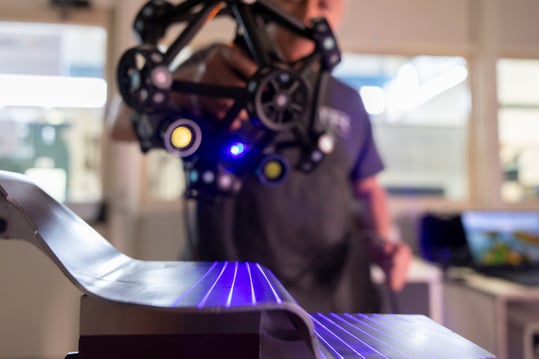
One of the most underestimated—yet often decisive—evaluation criteria is the technical support provided during the early stages of a project.
OEMs are not looking solely for manufacturing capacity.
They are looking for expertise.
An industrial partner capable of actively contributing to the industrialization process can help:
- Optimize component geometries
- Reduce part count
- Simplify assemblies
- Eliminate non-value-added operations
- Reduce tooling investments
- Improve manufacturability
It is during this phase that a significant portion of the project's value is created.
Because many of the costs an OEM will incur over the years are determined before the first production component is ever manufactured.
The Ideal Partner Is Not Necessarily the Lowest-Cost Supplier
Ultimately, supplier selection is no longer driven exclusively by price.
OEMs understand that unit cost is only one variable in a much larger equation.
Increasingly, purchasing decisions favor partners capable of delivering:
- Manufacturing capacity
- Scalability
- Documented quality performance
- Full traceability
- Technical support
- Operational resilience
In other words, the ideal partner is not necessarily the least expensive.
It is the partner that reduces risk throughout the entire lifecycle of the project.
And it is precisely this ability to combine technical expertise, controlled processes, and industrialization support that distinguishes a simple supplier from a true OEM manufacturing partner.
Conclusion
In the OEM industry, the difference between a successful project and one that generates costs, delays, and inefficiencies rarely depends on the component itself.
More often, it depends on how effectively that component has been industrialized.
A technically sound design does not automatically guarantee an efficient manufacturing process. Likewise, a solution that appears optimal from an engineering standpoint can become a continuous source of operational challenges when it must be produced thousands of times per year.
This is precisely where industrialization becomes a strategic differentiator.
Industrialization means designing with manufacturing in mind.
It means selecting the most appropriate production technology based on volume requirements, cost targets, and performance expectations.
It means simplifying wherever possible, eliminating non-value-added activities, and building manufacturing processes capable of maintaining quality and reliability over time.
For technical buyers, Supplier Quality Engineers (SQEs), and production managers, this approach generates benefits that extend far beyond unit cost reduction.
It enables organizations to:
- Reduce operational risk
- Increase supply chain resilience
- Improve product quality
- Accelerate engineering change implementation
- Ensure production continuity
- Support future volume growth
In an increasingly competitive market, OEMs are no longer looking simply for suppliers capable of manufacturing a component according to a drawing.
They are looking for industrial partners capable of actively contributing to the industrialization process by providing expertise, advanced manufacturing technologies, and a comprehensive understanding of the entire production value chain.
Because real value is not created when a design is completed.
Real value is created when that design can be transformed into a stable, scalable, and sustainable manufacturing process for the next ten years.
Are You Developing a New Structural Component?
Whether you are developing a new platform, updating an existing product, or managing a project that involves metal fabrications, plastic components, or complex assemblies, engaging your manufacturing partner early in the development process can significantly improve cost efficiency, reduce lead times, and enhance overall reliability.