Integrated production: why lifting OEMs prefer it
In the industrial lifting sector, the choice of suppliers for structural components such as frames, cabins, and metalwork directly affects product quality, production continuity, and overall project costs. For this reason, an increasing number of forklift and material handling OEMs are orienting their sourcing strategies toward suppliers with integrated production, capable of managing multiple stages of the manufacturing process in-house.
Laser cutting, CNC bending, welding, assembly, and surface treatments are no longer considered individual processes to be purchased separately, but rather parts of a single industrial flow that must ensure repeatability, reliability, and control. When this coordination is lacking, issues often arise downstream: delays, non-conformities, and difficulties in assigning responsibility along the supply chain.
It is in this context that integrated production establishes itself as a strategic lever for lifting OEMs—not only to improve the quality of the final product, but also to reduce operational risk and increase the overall efficiency of the project.
Why Integrated Production Is Strategic for Lifting OEMs
In the OEM world, production is never just a matter of unit cost. It is a combination of reliability, continuity, and the ability to meet deadlines and standards at industrial volumes. Fragmentation of the supply chain introduces management complexities and variables that are difficult to control, especially when structural components are critical for the final assembly of the vehicle.
Integrated production addresses this need by offering a more robust model, where processes and responsibilities are concentrated and manageable.
The complexity of structural components in lifting equipment
Frames, cabins, side panels, and load-bearing structures are not simply sheet metal components. They must ensure mechanical strength, structural rigidity, dimensional accuracy, and an aesthetic quality consistent with the positioning of the final product.
Furthermore, they must be designed for stable serial production, without continuous adjustments on the line or unexpected rework.
Frames, Cabins, and Load-Bearing Structures: Technical and Production Requirements
When these components are produced by different suppliers for each individual process, the risk of inconsistencies increases: cumulative tolerances, differing interpretations of the design, and workaround solutions that only emerge during final assembly. Integrated production, on the other hand, allows these aspects to be managed as part of a single, unified manufacturing system.
Integrated Production and Process Coordination
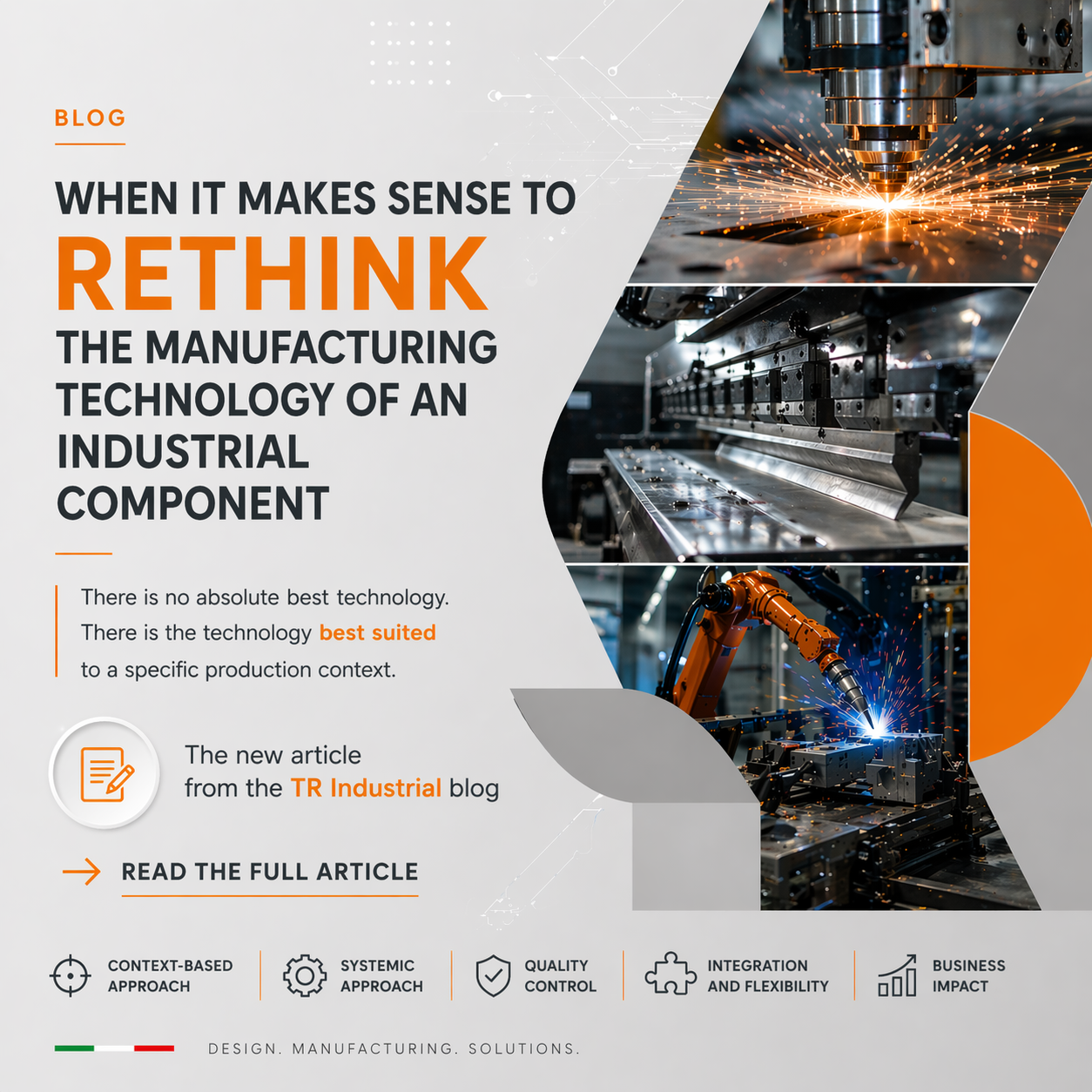
One of the main advantages of integrated production is the real coordination between the different manufacturing stages. Laser cutting, CNC bending, manual or robotic welding, assembly, and surface treatments such as powder coating or cathodic electrophoretic painting are not independent steps, but closely interconnected.
When cutting, bending, and welding are part of the same process
The design of the bends takes into account the subsequent welds, joints are planned based on the actual stresses of the vehicle, and surfaces are properly prepared to ensure the adhesion of anti-corrosion treatments. This approach allows potential issues to be identified during the industrialization phase, before they become problems on the production line or non-conformities in the finished product.
Consistent Quality and Control of the Manufacturing Process
For a lifting OEM, quality is not an isolated event but a condition that must be ensured over time. Integrated production allows for the implementation of intermediate quality controls at every critical stage of the process: from bending to welding, through surface treatments, up to final assembly.
Reducing Variability and Non-Conformities in Serial Production
This approach reduces variability, improves repeatability, and allows high standards to be maintained even at medium-to-large production volumes. From the buyer’s perspective, this means fewer reworks, fewer disputes, and greater supply stability.
How Integrated Production Reduces Hidden Project Costs
In some cases, integrated production not only improves quality and lead times, but also allows a complete rethinking of the component approach, creating value from an economic perspective as well.
Rethinking the Component to Eliminate Upfront Investments
During the development of a large structural side panel for a material handling vehicle, the initial plan called for a single molded piece, requiring a significant upfront investment in tooling. By taking a holistic approach to the component, we proposed an alternative solution: splitting the side panel into two parts, produced with different technologies yet perfectly integrated.
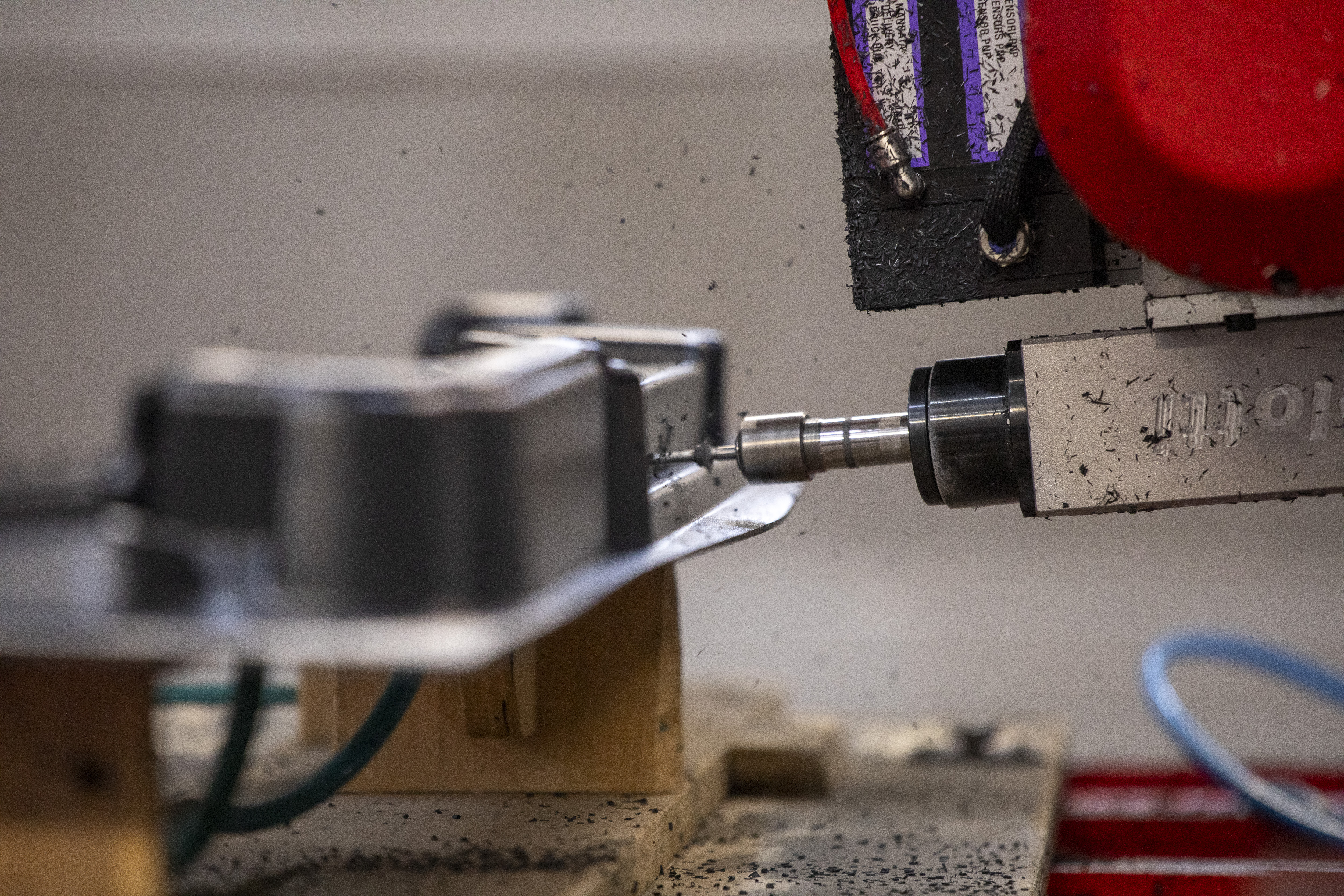
One section was made using press-brake forming, the other via thermoforming, then joined with a carefully engineered structural adhesive system. Material selection, adhesive type, and assembly method were developed in close collaboration with the client’s technical team, considering both mechanical performance and aesthetics.
The result is a final product that fully meets quality specifications, while eliminating the upfront tooling investment and significantly reducing project start-up costs, delivering both efficiency and value.
Streamlined Suppliers, Reduced Risk for OEM Supply Chains
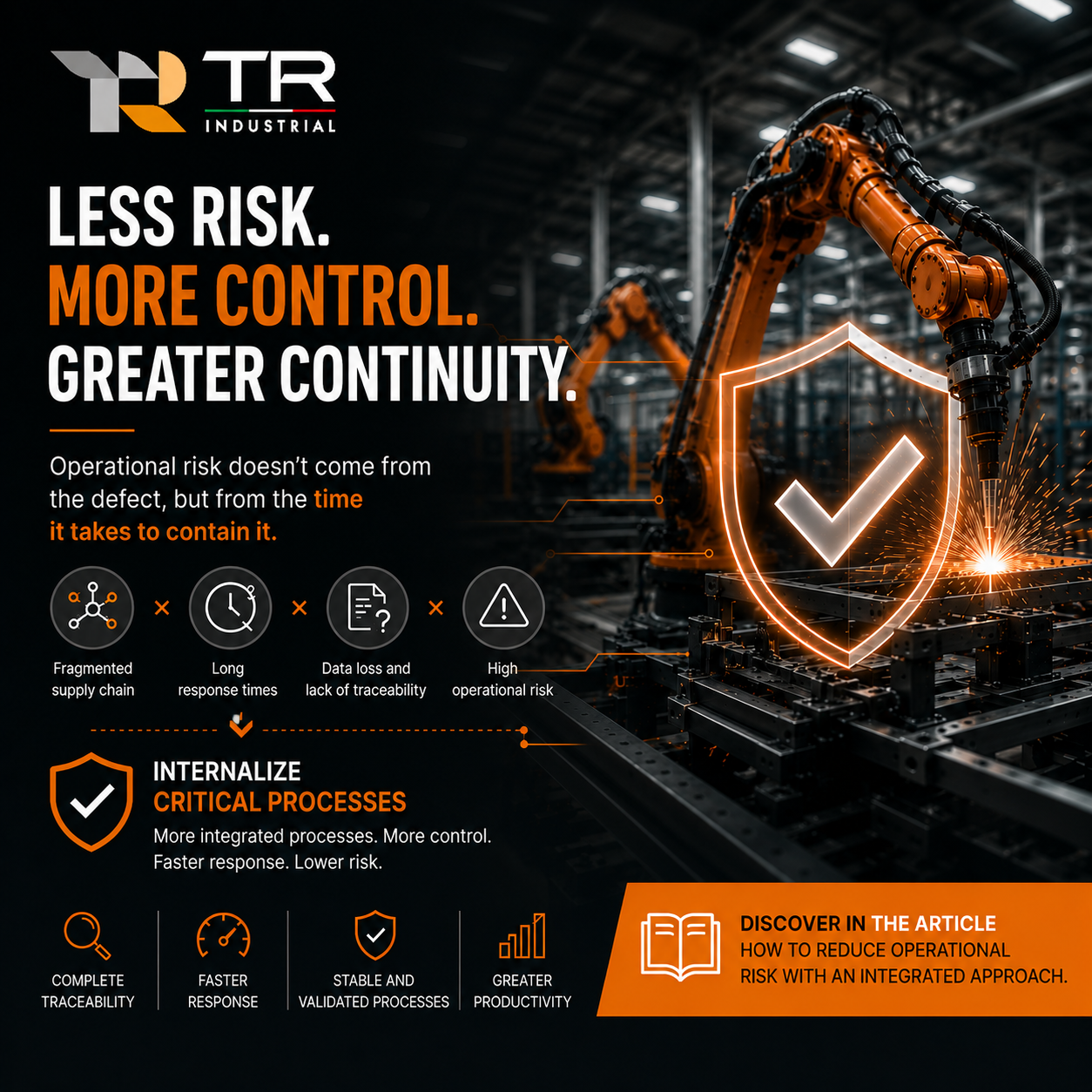
From the buyer’s perspective, integrated production also addresses an increasingly important organizational need: reducing the number of critical suppliers. Fewer points of contact mean less management complexity, clearer responsibilities, and greater control over lead times and quality.
Why OEM Buyers Reduce the Number of Strategic Suppliers
In a sector where production stoppages have immediate impacts and high costs, this simplification becomes a tangible competitive advantage and a protective measure for those managing sourcing.
Integrated Production: From Supply to Industrial Partnership
For these reasons, an increasing number of lifting OEMs are prioritizing industrial partners capable of offering not only production capacity, but also process insight, technical expertise, and collaborative design capabilities.
Integrated production is neither a trend nor a shortcut: it is a structural response to an industry that demands greater control, higher reliability, and fewer unexpected issues. This is where the difference between a simple supplier and a true industrial partner becomes clear—one who can transform production complexity into operational continuity and long-term value.