Industrial Supply Chain: Where Bottlenecks Really Arise in OEMs
In the automotive, handling, agricultural, and HVAC sectors, production bottlenecks rarely arise suddenly… Unfortunately, they build up over time and, in most cases, remain invisible.
Very often, they are not caused by the production capacity of a single supplier, but by the overall structure of the supply chain.
The question every production manager should ask is simple:
Is my supplier system designed to ensure continuity… or to manage complexity?
The First Critical Point: Fragmentation of Processes
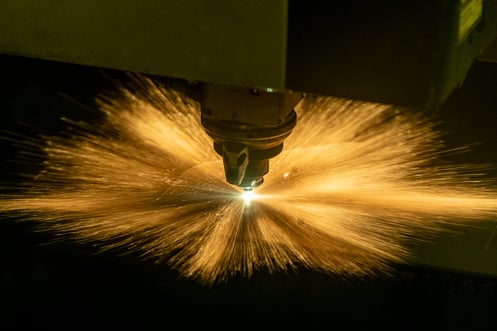
Many structural components in industrial vehicles go through multiple stages:
- Laser cutting
- Bending
- Welding
- Surface treatments
- Painting
- Partial assemblies
- Technical packaging
When these stages are distributed across different suppliers, the project is no longer just technical. It becomes a logistical challenge.
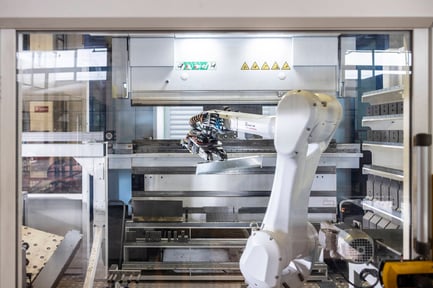
Each step introduces:
- Physical transfers
- Waiting times
- Coordination between technical offices
- Risk of information loss
- Misalignment of priorities
The result is not immediately visible.
But in the medium term, it creates structural slowdowns.
Outsourced Processes: An Underestimated Risk
Outsourcing certain critical stages may seem like a flexible choice.
In reality, it introduces variables that are difficult to control:
- Production priorities that do not align
- Third-party plant saturation
- Non-uniform quality standards
- Longer response times in case of non-conformities
A typical example concerns surface treatments.
If e-coating or painting is not integrated into the production cycle, any delay propagates downstream.
The component is not late because it hasn’t been produced. It’s late because it hasn’t been completed.
Technical Coordination as a Critical Factor
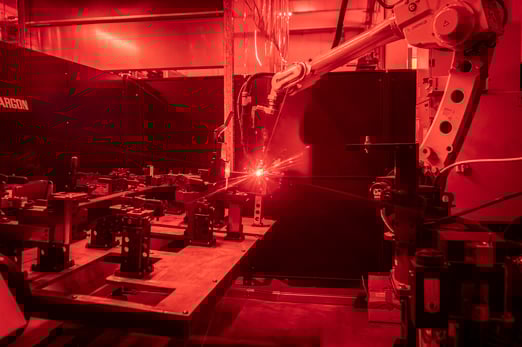
In complex OEM projects, coordination is not just an administrative detail.
It is a technical function.
When a component moves from:
OEM Technical Office → Supplier A → Supplier B → Supplier C
design changes become slower to implement.
Each revision:
- Must be shared
- Must be understood
- Must be acknowledged
- Must be realigned with schedules and priorities
With multiple stakeholders, even a simple geometric change can turn into weeks of operational realignment.
The False Advantage of Extreme Specialization
Vertical specialization of suppliers is valuable when:
- The project is stable
- Volumes are predictable
- Variables are limited
It becomes a risk when:
- The project evolves
- Volumes grow rapidly
- Flexibility is required
- Pre-series issues emerge
In these cases, fragmentation creates rigidity. And rigidity is the opposite of resilience.
Production Continuity: A Matter of Architecture, Not Emergency
Production continuity is not achieved by intervening when a problem arises.
It is built by designing a coherent supply chain.
An integrated system allows for:
- Fewer intermediate steps
- Reduced exposure to external delays
- Greater control over priorities
- Faster implementation of changes
- Increased quality stability
It’s not just about reducing the number of suppliers.
It’s about reducing friction points.
Signals Indicating a Structural Bottleneck
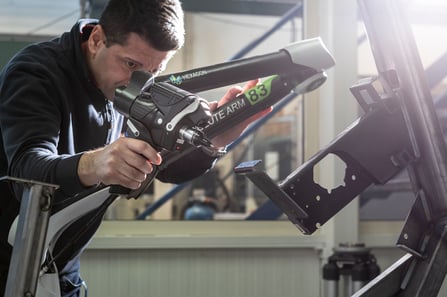
A diligent technical buyer should monitor certain indirect indicators:
- Frequent realignments between suppliers
- Deviations between scheduled and actual completion dates
- Difficulty managing production peaks
- Increase in micro-delays not attributable to a single party
- Rise in non-conformities linked to chained process defects
When these signals become recurrent, the problem is not episodic.
It is structural.
The Strategic Question
In multinational projects, the real risk is not a single mistake, but the accumulation of small inefficiencies along the entire chain.
Reducing bottlenecks does not just mean increasing production capacity.
It means simplifying the supply chain structure, making it smooth, yet reliable and resilient to unforeseen events.
And often, simplification involves:
- Integration of processes
- Reduction of external handoffs
- Unified technical contacts
- Centralized management of priorities
Conclusion
Bottlenecks in OEMs rarely originate on the shop floor.
They arise in the design of the supply chain.
Fragmentation, outsourced processes, and complex coordination are not obvious mistakes. They are organizational choices that, over time, can limit production continuity.
True industrial resilience is not about reacting quickly to problems.
It is about reducing the likelihood that they occur.