How to Truly Evaluate an Industrial Supplier
When a lifting OEM decides to turn to suppliers with integrated production, the question is no longer whether to do it, but how to distinguish a true industrial partner from those who merely centralize processes.
Not all integrated productions are the same.
And for a technical buyer, the difference is not theoretical: it directly affects quality, lead times, reliability, and operational risk.
This article aims to clarify which factors to evaluate concretely when assessing a supplier that presents itself as “integrated.
Integrated Production: It’s Not Just About Doing Everything In-House
Many suppliers claim to have integrated production because they handle multiple processes in-house. But real integration is not measured by the number of machines—it’s measured by how the processes are designed to interact with each other.
A supplier may have laser cutting, bending, and welding in the same facility, but if each department works in silos, the final result is no different from a fragmented supply chain.
The first question to ask, then, is:
Is the integration only organizational, or is it truly process-driven?
Process Integration: What Really Makes the Difference
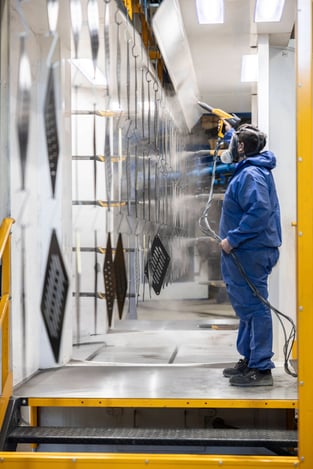
An integrated industrial partner works on technical continuity between production stages. This means, for example:
- Bends designed with welding sequences in mind
- Welds planned according to the actual stresses on the machine
- Surfaces properly prepared for painting or e-coating
- Assemblies designed to minimize adjustments and rework on the line
When these aspects are managed in a coordinated way, the supplier doesn’t just “execute” a drawing—they contribute to the industrial robustness of the project.
Industrialization Capability: Beyond the Technical Drawing
For a lifting OEM, one of the most critical moments is the transition from design to serial production.
This is where the difference emerges between those who simply produce parts and those who actively support industrialization.
A truly integrated supplier is able to:
- Propose alternative solutions to reduce costs or initial investments
- Suggest design changes that improve manufacturability without altering functionality
- Combine different technologies (press-braking, thermoforming, structural assemblies) in a coherent way
This capability is particularly relevant for complex structural components such as side panels, cabins, and frames, where a traditional approach can generate high costs even during the ramp-up phase.
Quality Control Throughout the Process, Not Just at the End
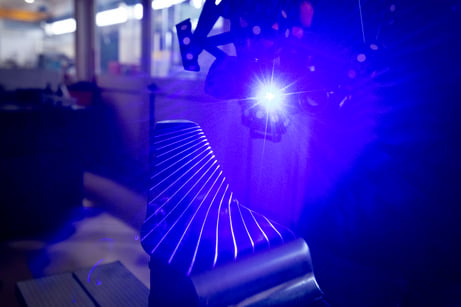
Another key element to evaluate is the quality control model.
In the most advanced integrated suppliers, quality is not left to final inspection—it is distributed across critical stages of the production process.
Dimensional checks after bending, weld inspections, monitoring of surface treatment cycles, and final assembly checks allow for:
- Reduced variability
- Improved repeatability
- Detection of anomalies before they reach the OEM line
For the buyer, this translates into lower exposure to recurring non-conformities and greater long-term supply stability.
Responsibility Management: A Single Point of Contact
From a sourcing perspective, one of the most tangible advantages of integrated production is clarity of responsibility.
When multiple processes are managed by a single partner, there is no blame-shifting between suppliers.
This often-overlooked aspect has a direct impact on:
- Problem resolution times
- Management of urgent issues
- Protection of the buyer in dealings with production and technical management
A single industrial point of contact means less complexity and greater control.
How to Determine if a Supplier Is Truly Integrated
During evaluation, certain questions help clarify the picture:
- How are the interfaces between different processes managed?
- Does the supplier support industrialization, or just production?
- Are quality checks performed throughout the process or only at the end?
- Is there experience managing complex assemblies at serial volumes?
The answers to these questions are worth more than any brochure.
How Integrated Production Boosts Industrial Reliability
For lifting OEMs, choosing a supplier with integrated production is not a tactical decision—it’s a structural choice that impacts reliability, production continuity, and long-term competitiveness.
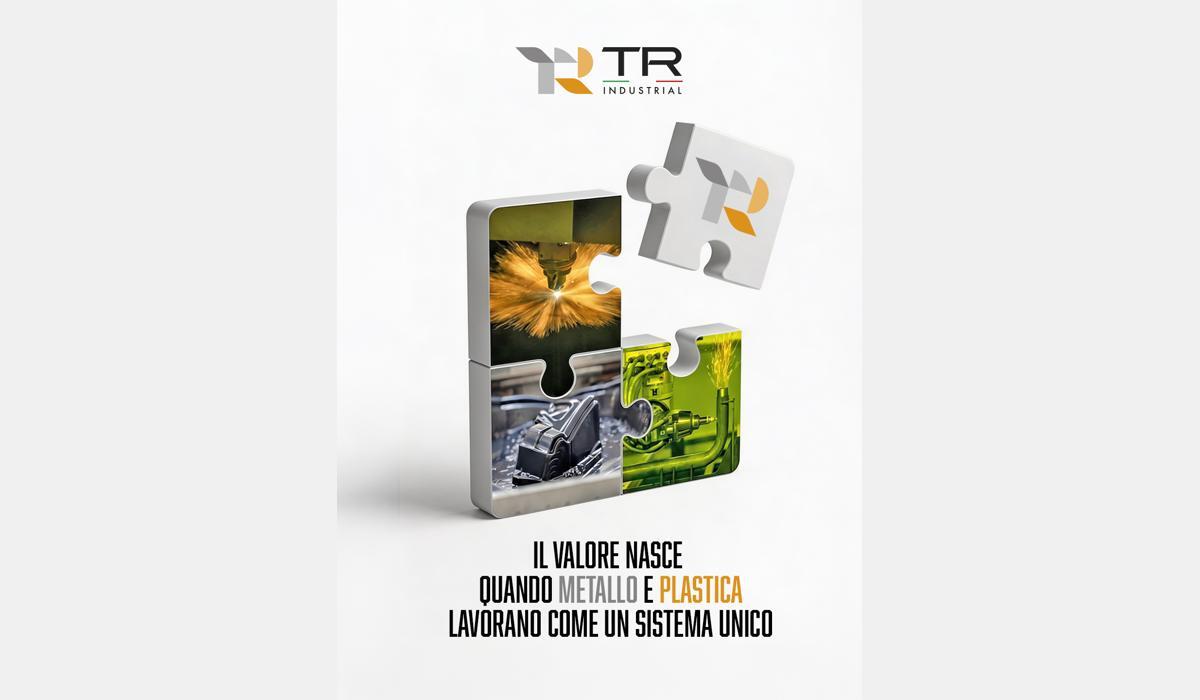
The real difference isn’t in “doing more processes,” but in making them work together seamlessly.
This is exactly where a simple supplier differs from an industrial partner capable of supporting the OEM throughout the entire product lifecycle.