When It Makes Sense to Rethink the Production Technology of an Industrial Component
There is no universally “best” technology.
There is only the technology that best fits a specific production context.
In the OEM manufacturing world, production technology is not a static choice.
It is an engineering variable that must evolve alongside volumes, quality requirements, product complexity, and supply chain structure.
Yet in everyday industrial practice, many components continue to be produced using technologies defined years earlier—often without any real technical reassessment.
Not because those technologies are wrong, but because they are no longer optimal in the current context.
For technical buyers, SQEs, and production managers, this represents a critical issue: maintaining a misaligned process can generate structural inefficiencies across the entire supply chain.
Rethinking production technology, therefore, is not an exercise in innovation for its own sake.
It is an industrial optimization activity.
There Is No “Best” Technology—Only the Most Suitable One
One of the most common mistakes is approaching the topic with a binary mindset:
- technology A vs. technology B
- “old” process vs. “modern” process
In reality, in OEM environments, the choice is always contextual.
Each technology has its own domain of validity, determined by:
- component geometry
- mechanical requirements
- production volumes
- required tolerances
- integration with other components
- supply chain structure
The point is not to replace a technology.
It is to understand when a technology is no longer aligned with current operating conditions.
When Technology Becomes a Constraint
A production process becomes a limitation when recurring signals begin to emerge:
- quality variability between batches
- difficulty maintaining tolerances at higher volumes
- increasing lead times
- dependency on poorly controllable external suppliers
- logistical complexity
- difficulty implementing design changes
These signals indicate a disconnect between the originally selected process and current production requirements.
In such cases, the issue is not the component—it is the technology used to produce it.
An Engineering Approach: From Process to System
Rethinking production technology requires a systemic approach.
It is not about replacing a single operation, but about analyzing:
- how the component is manufactured
- how it is handled and moved
- how it is assembled
- how it interacts with other components
This leads to a comprehensive review involving:
- part design
- manufacturing sequence
- material selection
- process integration
The Role of Industrialized Sheet Metal in Structural Components
For a wide range of structural components—common in material handling, agricultural machinery, or large HVAC systems—an industrialized sheet metal approach can offer high scalability.
Through an integrated system that includes:
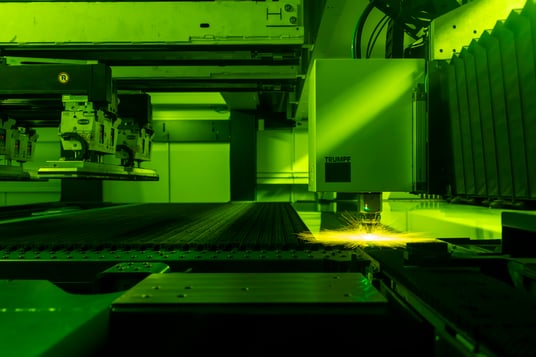
- high-precision robotic laser cutting
- CNC-controlled bending
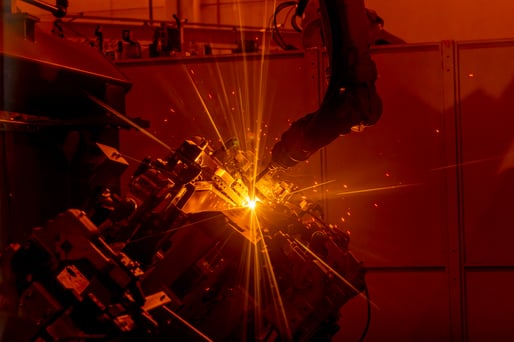
- robotic welding for repeatability
- surface treatments (powder coating, e-coating)
- in-house assembly
it is possible to achieve a high level of process control.
This approach is particularly effective when:
- geometries are developable or reconfigurable
- production volumes are medium-to-high or high
- high repeatability is required
- multiple components need to be integrated
Metal-Plastic Integration: An Increasingly Relevant Driver
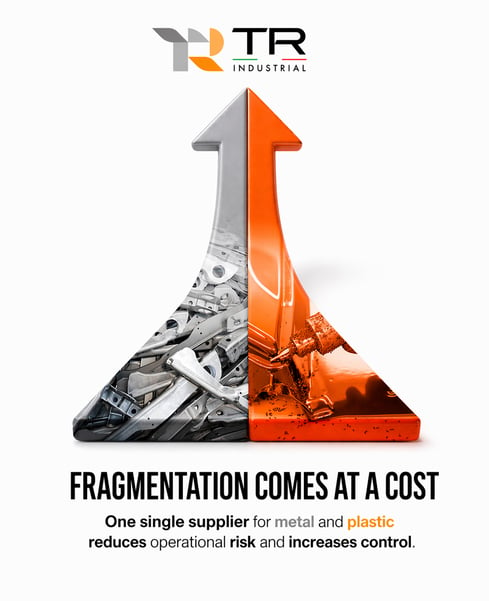
One of the most evident trends in OEM sectors is the integration of metal and plastic components.
The ability to combine:
- metal processing
- plastic injection molding
- thermoforming
within the same production ecosystem makes it possible to:
- reduce the number of suppliers
- improve consistency between components
- optimize design
- simplify assembly
This is particularly relevant for:
- housings
- panels
- hybrid structures
- aesthetic-functional components
Process Control: From Variability to Standardization
One of the most critical aspects of changing technology is the level of control.
Industrialized processes make it possible to:
- monitor production parameters
- standardize operations
- reduce variability
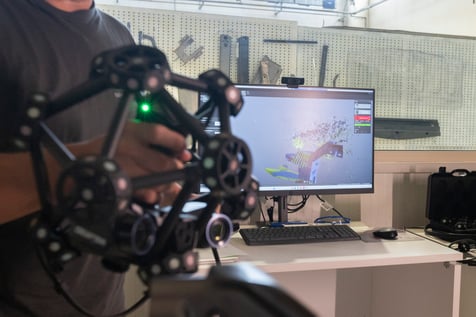
- implement structured quality controls
In integrated processes, every phase becomes traceable:
- laser cutting parameters
- bending sequences
- welding cycles
- surface treatments
This enables a shift from a reactive approach to a preventive control model.
Impact on Product Quality
Changing production technology has a direct impact on quality:
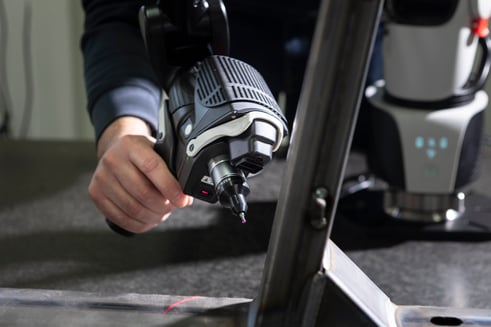
- improved dimensional consistency
- better component fit
- reduced surface defects
- greater process stability
For the end customer, this translates into:
- fewer issues on the production line
- reduced scrap rates
- higher product reliability
Supply Chain: Reducing Complexity
One of the most significant impacts concerns the supply chain.
A fragmented process leads to:
- more suppliers
- more process steps
- more variables
- higher risk
An integrated process, on the other hand, enables:
- fewer external steps
- greater control
- shorter lead times
- increased flexibility
For multinational OEMs, this means greater resilience.
Decision KPIs for Technology Change
Technical buyers do not make decisions based on perception, but on data.
Key KPIs to consider include:
- quality stability (PPM, scrap rates)
- overall lead time
- supply variability
- total cost of ownership (TCO, not just unit cost)
- management complexity
- level of traceability
When these indicators show critical issues, changing technology becomes a concrete lever.
The Role of the Industrial Partner
Rethinking a production process requires cross-functional expertise.
An industrial partner must be able to:
- analyze the component
- propose technical alternatives
- support redesign activities
- industrialize the solution
- validate the results
The real difference lies not in a single process, but in the ability to manage the entire system.
In the OEM context, production technology is a strategic lever.
There is no universally best solution—only the one most consistent with:
- production volumes
- quality requirements
- supply chain structure
Rethinking technology when needed allows hidden inefficiencies to be transformed into concrete operational advantages.
If some of your components show recurring issues in terms of quality, lead times, or management complexity, the first step may be to assess whether the current production technology is still the most suitable for today’s context.